



Shipping goods from Dubai to Saudi Arabia is a very common part of business for companies throughout the UAE. Retailers shipping goods to customers, construction companies sending materials to sites, and manufacturers will be reliant on a constant supply of machinery and spare parts.
Although the two countries share a land border, getting commercial cargo across it is not simply a matter of booking a lorry. Businesses must consider factors including cost of transport, customs documentation, product regulations and the delivery schedule.
With the right preparation, shipping can be a lot easier to manage. Here’s what businesses need to know before shipping goods from Dubai to Saudi Arabia.
1. Choose the Right Shipping Method
The best transport option depends on the shipment size, destination, budget and urgency.
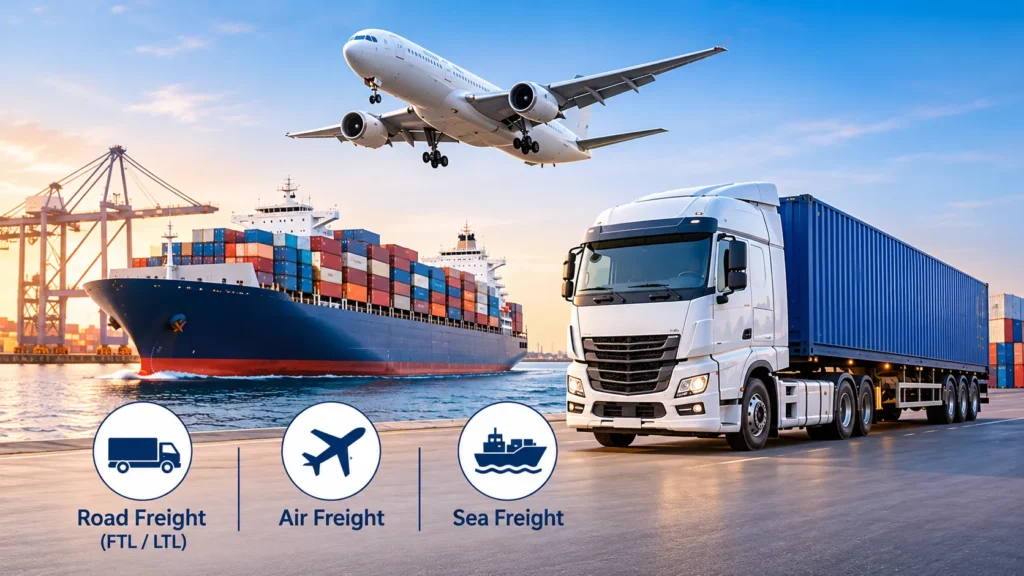
Road freight is a common choice for commercial shipments between the UAE and Saudi Arabia. It offers flexibility for deliveries to warehouses, factories, retail outlets and construction sites.
Businesses can choose between:
- Full Truck Load (FTL): Suitable for large shipments that need dedicated truck space.
- Less than Truck Load (LTL): Useful for smaller shipments that can share space with other cargo.
- Air freight: A practical option for urgent, valuable or time-sensitive goods.
- Sea freight: Worth considering for large volumes, heavy cargo or shipments that fit better into a port-based transport plan.
For example, a Dubai distributor sending cartons of electrical supplies to Riyadh may consider road freight, while a company urgently replacing a machine component could choose air freight.
The cheapest option is not always the most economical overall. Delivery time, handling charges and the cost of a possible delay should also be considered.
2. Understand the Route and Delivery Time
Road shipments generally leave the UAE through the Al Ghuwaifat border crossing and enter Saudi Arabia through Al Batha. From there, trucks continue towards destinations such as Riyadh, Dammam, Al Khobar and Jeddah.
The time required depends on the destination, cargo type, border conditions and completeness of the documents.
A shipment heading to the Eastern Province will have a different journey from one travelling to Jeddah on the Red Sea coast. Border inspections or missing paperwork can also extend the schedule.
When planning a delivery, ask your logistics provider for an estimated door-to-door timeline. Make sure the estimate accounts for customs clearance and final delivery, not just the time spent on the road.
3. Prepare the Required Shipping Documents
Documentation is one of the most important parts of cross-border transport. Even when the goods are packed and ready, missing or inconsistent paperwork can hold up a shipment.
Commercial shipments commonly require some combination of the following:
- Commercial invoice showing the goods, quantities, values and other required details.
- Packing list showing the contents, package count and weights.
- Certificate of origin, where required.
- UAE export or re-export customs declaration.
- Road transport document or other relevant shipping document.
- Saudi import declaration and supporting documents.
- Product conformity certificates or permits, where applicable.
Requirements vary according to the goods and how they are being shipped.
For example, if the invoice states that a shipment contains 100 electrical components but the packing list shows a different quantity, customs officials may request clarification.
Before dispatch, compare the invoice, packing list and transport documents. Accurate product descriptions and appropriate HS codes also help the parties involved identify the correct customs treatment.
4. Check Saudi Customs and Product Regulations
Regulations do not apply uniformly to products coming into Saudi Arabia.
Certain products must be approved, registered or checked for compliance before arrival. Depending on the kind of product being shipped, the relevant Saudi SABER platform and compliance paperwork may be necessary.
Food products, cosmetics, medical products, electrical devices and some relevant construction materials may have individual regulations.
The importer of lighting fixtures from Dubai needs to verify whether the shipment comes under the Saudi technical regulations or not and prepare it for delivery accordingly. If the certification requirement is discovered too late, once the shipment has left, it may result in delays.
5. Plan for Border Clearance in Advance
If freight is to be transported over roads, the export process in the UAE and import process in Saudi Arabia need careful consideration.
It is important for all parties involved (i.e. exporter, importer, customs brokers and transport service provider) to coordinate declaration and border arrangements. Import clearance will follow applicable customs regulations in Saudi Arabia, with imports going through the Fasah platform.
In addition, trucks leaving Abu Dhabi for Saudi Arabia through Al Ghuwaifat should obtain pre-crossing permits.
Finally, it is a good practice to check whether the Saudi consignee is ready to finalise the import process before dispatch. This reduces the risk of a truck arriving while important declarations or approvals are still outstanding.
6. Calculate the Full Shipping Cost
A transport quotation is only one part of the total cost of moving goods internationally.
Depending on the shipment, the final amount may include:
- Collection and loading charges.
- Road, air or sea freight.
- Customs brokerage and clearance fees.
- Applicable duties and taxes.
- Product certification or inspection costs.
- Border-related charges and additional handling.
- Delivery to the final warehouse or business premises.
Suppose a supplier quotes an attractive rate to transport building materials from Dubai to Riyadh. If the quotation excludes customs services, special permits or destination delivery, the final cost may be higher than expected.
Ask for a clear breakdown of included and excluded services. It also helps to agree in advance on who will pay the import duties, taxes and other destination charges.
7. Work With a Logistics Partner That Understands the Route
International shipping is not just booking a truck to deliver goods; it requires coordination among several parties.
For example, the supplier prepares the goods for transport, the logistics provider provides transportation, and customs representatives handle the necessary declarations and clearance procedures; it works like a supply chain.
If the above supply chain does not work well at any one place, the whole process will collapse. It may extend delivery time and cost.
SafeBox Logistics supports businesses with international road transport, freight forwarding, customs clearance, air freight, sea freight and related logistics services.
Final Thoughts
The shipping process from Dubai to Saudi Arabia can be smoother if the preparations are carefully made before cargo is dispatched.
Selecting the right transportation method, preparing accurate documentation, verifying import regulations for specific products, and allocating enough time for the border clearance stage can help to avoid unnecessary delays and lower shipping costs.
Each cargo shipment has its own particulars. At SafeBox Logistics, our effective planning allows companies to relocate their goods across the UAE-Saudi Arabia border more conveniently.