


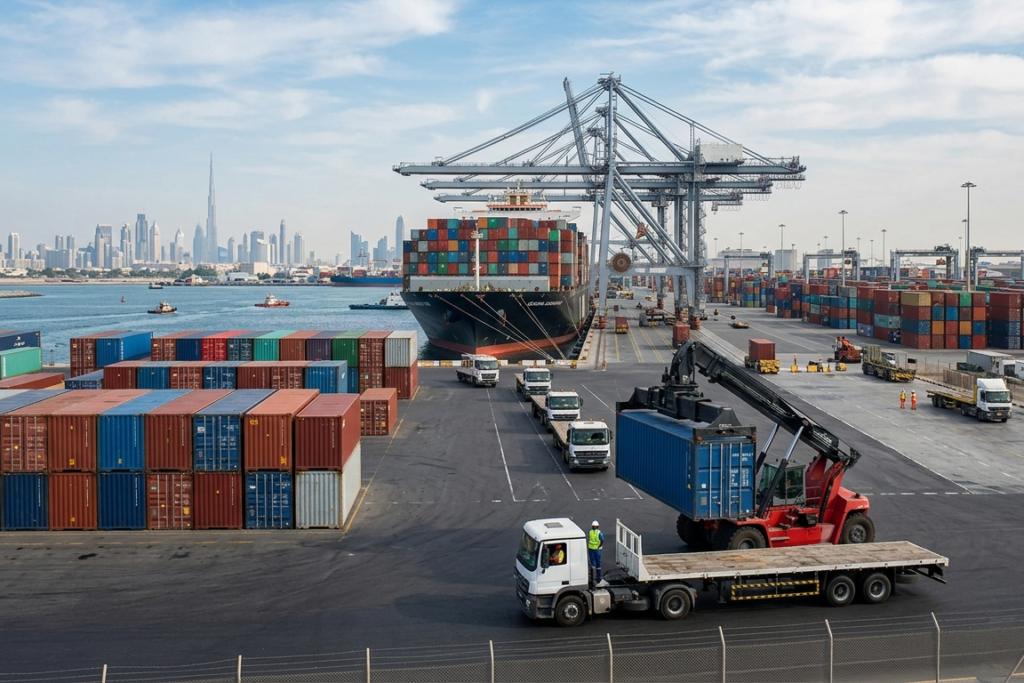
Importing goods into the UAE is not complicated once you know the process. But if you are going in blind, small oversights can cause real delays. A missing document, an incorrect declaration, or skipping a permit that your product category requires – any of these can hold your shipment at the port for days longer than planned.
This guide covers the full process from start to finish so you know what to prepare, what to expect, and where people tend to go wrong.
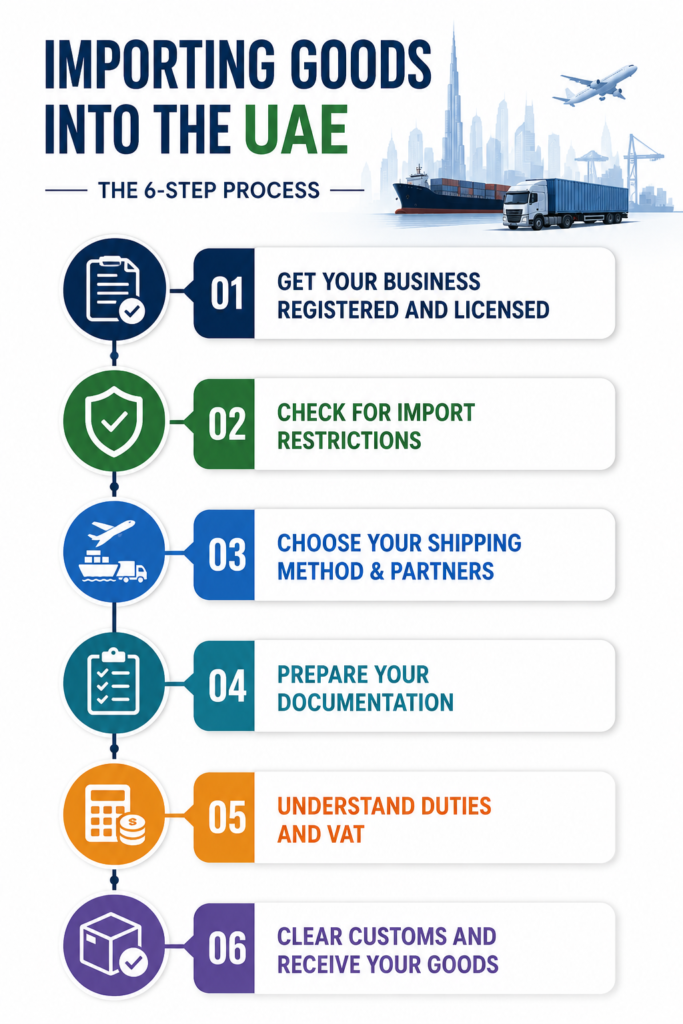
Step 1: Get Your Business Registered and Licensed
The starting point is a valid trade licence that includes import activity. On the mainland, this comes from the Department of Economic Development in whichever emirate your business operates from. The licence type depends on what you do and what you plan to bring in.
Free zone businesses register through the authority managing that specific zone. Rules and costs vary between zones, so it is worth spending time on this decision before committing. One significant advantage of free zone registration is that imported goods sitting within the zone are typically not subject to customs duty. That changes the moment those goods cross into the UAE mainland.
Once licensing is handled, register with UAE Customs. You will receive a customs registration number. Without it, no shipment clears through any UAE port, airport, or border crossing.
Step 2: Check Whether Your Products Have Any Import Restrictions
This step catches a lot of first-time importers off guard. Assuming your goods can enter freely without checking is a mistake that can have serious consequences. Certain product categories need prior approval before they can be imported. Pharmaceuticals, specific food products, chemicals, and some electronics fall under this. Depending on what you are bringing in, approvals may be needed from the Ministry of Health, the Food Safety Department, or the Telecommunications and Digital Government Regulatory Authority. Alcohol imports are allowed but heavily regulated, and specific licencing applies.
Then there are goods that cannot enter the country at all. Narcotics, certain weapons, counterfeit items, and materials that conflict with UAE law or cultural standards are prohibited outright. Getting caught importing banned goods is not just a customs issue. It can lead to confiscation, steep fines, and legal trouble that goes well beyond the shipment itself.
When in doubt, speak to UAE Customs or a licensed customs broker before your cargo leaves the origin country. That one conversation can save a lot of grief later.
Step 3: Decide on Your Shipping Method and Work With the Right People
Your choice of shipping route comes down to what you are sending, when you need it, and what you are willing to spend. Sea freight is the default for bulk or heavy cargo. Jebel Ali Port in Dubai processes an enormous share of the UAE’s imports and is well connected to major global shipping routes. It is cost-effective for large volumes. Transit times vary depending on origin, but the trade-off on price is usually worth it for non-urgent shipments.
Air freight costs more. Quite a bit more. But if the goods are time-sensitive or high-value and delays are not an option, flying cargo through Dubai International Airport or Abu Dhabi International Airport is the practical choice. Land transport through border crossings with Saudi Arabia and Oman tends to be used mainly for goods moving within the GCC.
Whatever route you go with, having a freight forwarder in your corner matters. They handle carrier coordination, track documentation, and deal with problems when they come up rather than leaving you to figure it out from another country.
Step 4: Prepare Your Documentation Carefully
Paperwork problems are behind most of the customs delays that businesses complain about. The solution is straightforward: get your documents right before the shipment arrives. Chasing missing paperwork after a cargo vessel has docked is stressful and expensive.
Here is what you will generally need:
A commercial invoice with the seller and buyer details, a proper description of the goods, quantities, pricing, and total value. Some categories of goods require the invoice to be attested before it will be accepted.
A packing list that matches the invoice exactly and breaks down how the goods are packed, weights included.
A bill of lading for sea freight or an airway bill for air freight. This is the document your carrier issues and confirms the shipment is on its way.
A certificate of origin stating where the goods were manufactured. This is used to determine the applicable duty rate and may affect whether your shipment qualifies for preferential treatment under GCC trade agreements.
Beyond these basics, some product types need conformity certificates, health clearances, lab results, or sector-specific approvals. Know your product category and confirm what is required before packing starts.
Step 5: Understand What You Will Owe in Duties and VAT
The standard customs duty rate in the UAE is 5 percent, applied to the CIF value of your goods. CIF stands for Cost, Insurance, and Freight. Put simply, it is the value of the goods themselves plus the cost of shipping and insuring them to get here.
Not everything is taxed at the same rate. Tobacco and alcohol carry higher duties. Some medicines, raw materials used in local manufacturing, and certain food products come with reduced rates or exemptions. Free zone imports are duty-free as long as the goods stay within the zone.
VAT at 5 percent is charged on top at the point of import. Add both figures into your landed cost calculations before you finalise pricing or margins for your product. Finding out what you owe after the goods have already arrived and you have committed to a sale price is a situation worth avoiding.
Step 6: Go Through Customs Clearance and Collect Your Goods
Once your shipment reaches the UAE, a customs declaration gets submitted through the relevant system. For sea freight this happens through the port authority platform; air cargo goes through the airport channels.
Shipments with complete and accurate documentation usually move through without much delay. Those that are flagged for inspection take longer. Physical checks add time and sometimes generate additional queries that need responses before goods are released.
After the declaration is accepted and duties are settled, your goods are cleared. You can then move them directly to your warehouse, forward them to a customer, or route them into whatever distribution setup you have in place.
A Few Things That Will Make Your Shipping Easier
Keep every document related to your shipment saved digitally and easy to locate. When customs sends a query, the faster you can respond with the right paperwork, the faster things move.
Do not plan your supply chain on the assumption that everything will arrive exactly on time. Congestion at ports happens. Inspections add delays. Public holidays affect processing.
At Safebox Logistics, we support businesses through every part of this process. Whether you need help with documentation, customs clearance, or getting goods delivered to their final destination, our team handles it. Reach out and tell us what you are shipping. We will take it from there.