


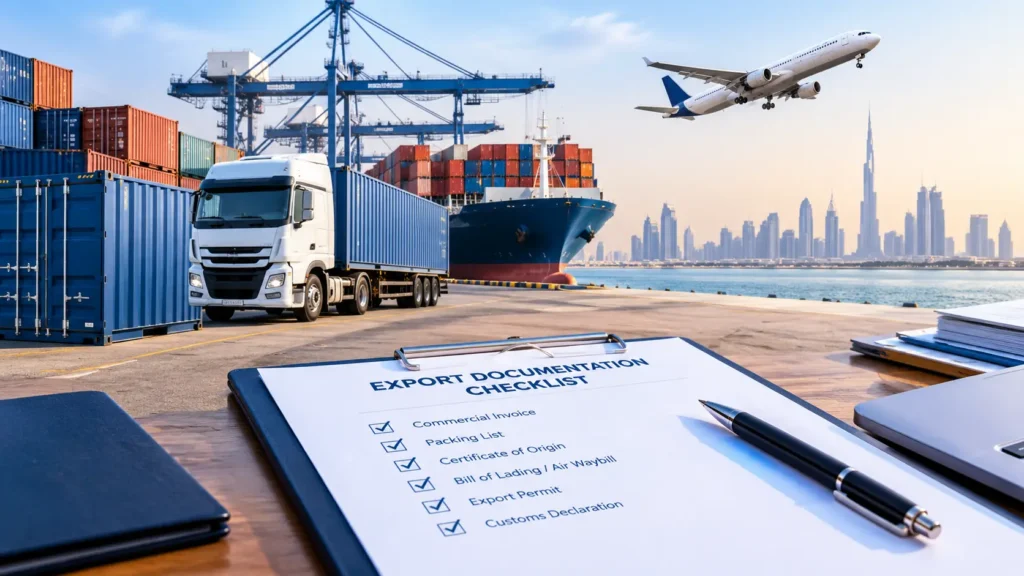
A shipment can leave your warehouse in perfect condition and still sit at the port for days. The cause is rarely the cargo. It is usually a missing signature, a mismatched figure, or a document nobody prepared. For UAE exporters, getting the paperwork right before the truck arrives is the cheapest way to protect delivery dates.
Why Export Documents Matter
Every export passes through several checkpoints: your own team, the carrier, UAE Customs, and finally the customs authority in the destination country. Each one checks that your documents tell the same story. If the invoice says 500 units and the packing list says 480, expect questions. Questions mean delays, and sometimes storage charges.
A clean, consistent document set helps you:
- Clear customs faster at both ends
- Avoid storage and demurrage costs
- Get paid on time, especially under a letter of credit
- Build trust with overseas buyers
The Core Export Documents
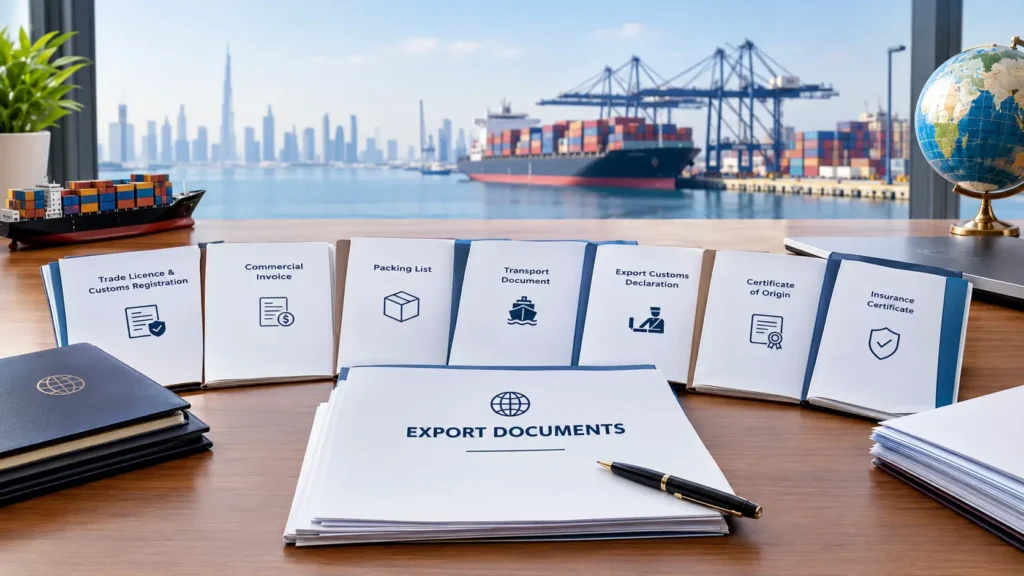
1. Trade Licence and Customs Registration
Your company needs an active trade licence that covers the activity, plus a customs code registered with the customs authority of your emirate. Without these, you cannot lodge a declaration at all.
- Check that the licence activity matches the goods you export
- Confirm the customs code is active
- Note expiry dates well in advance
2. Commercial Invoice
The commercial invoice is the main document customs and your buyer rely on. Describe goods specifically, because a vague line such as “spare parts” invites inspection.
- Buyer and seller names and full addresses
- Detailed description of the goods
- Quantity, unit price, total value, and currency
- Agreed Incoterms
3. Packing List
The packing list records how the goods are packed, and it must match both the invoice and the physical cargo. Proper packing makes this document easier to get right, and Safebox’s packing service is one option if your goods need secure packing for the journey.
- Number of packages and type of packing
- Gross and net weights
- Dimensions of each package
- Shipping marks and carton numbers
4. Transport Document
This document is issued by the carrier or forwarder. It acts as the contract of carriage and as a receipt for the goods. Which one you need depends on the mode of transport.
- Bill of lading for sea freight
- Air waybill for air freight
- Road consignment note for road transport
If you are handling several shipments or modes at once, working with a freight forwarding partner keeps these documents coordinated from pickup to delivery.
5. Export Customs Declaration
The declaration is filed electronically before the goods leave. In Dubai, it goes through the Dubai Customs system, either by you or by a clearing agent. A wrong HS code is one of the most common errors, so confirm the classification before you file. Many exporters prefer to hand this step to a specialist customs clearance team so it is lodged accurately and on time.
Details you will need:
- HS code of the goods
- Declared value
- Country of origin and destination
- Transport document details
6. Certificate of Origin
Many buyers and banks ask for one. It is issued through a chamber of commerce, such as the Dubai Chamber, and confirms where the goods were produced. In some destination markets it can also support preferential duty treatment.
7. Insurance Certificate
Cover is not always mandatory, but your Incoterms or the buyer’s contract may require it. Keep the certificate with the rest of the shipping set.
8. Letter of Credit Documents
If the buyer pays through a letter of credit, your documents must match its terms exactly. Even a small spelling difference can lead the bank to reject the presentation, so review the terms before you prepare the set.
Extra Paperwork for Regulated Goods
Some products need approvals on top of the standard set. Food and agricultural items, chemicals, medical products, and dual-use goods may require permits or certificates from the relevant authority. Dangerous goods also need special declarations, packaging, and labels.
Check the destination country’s rules too. Some markets ask for attested documents, translations, or health and quality certificates. Confirm these requirements before you book the shipment, not after the cargo is already at the port.
Common Mistakes to Avoid
- Quantities, weights, or values that differ between documents
- An incorrect or poorly researched HS code
- An expired trade licence, permit, or certificate
- Incomplete consignee details, such as a missing phone number or tax ID
- Submitting documents after the cut-off time for the flight or vessel
Practical Tips for a Smoother Export
Build a standard document template for each product line so details stay identical from one shipment to the next. Agree the document requirements with your buyer in writing before dispatch. Keep digital copies of every file, because a customs officer or bank may ask for a reissue at short notice. Finally, leave a buffer of at least a day or two before cut-off, especially for first-time shipments to a new country.
How Safebox Logistics Can Help
Safebox Logistics operates from Dubai International Airport and has more than 11 years of experience moving cargo across the UAE and internationally. The team supports exporters by air, sea, and road, with real-time shipment tracking and round-the-clock support. If you are unsure which documents your next shipment needs, contact the team through the website.
Summary:
Good export documentation is mostly about preparation and consistency. Check your licences, match every figure across your documents, confirm destination requirements early, and file with time to spare. Do that, and your cargo spends its time in transit instead of waiting in a customs queue.